
Barret's Esophagus in Newport Beach, CA
Barrett’s esophagus is a condition in which the normal lining of the esophagus changes after long-term exposure to stomach acid. At Homeira Mehrabian, MD Inc. in Newport Beach, CA, evaluation of Barrett’s esophagus is an important part of comprehensive reflux care. These cellular changes are most often associated with chronic gastroesophageal reflux disease. Early identification allows for appropriate monitoring and management to reduce the risk of progression.
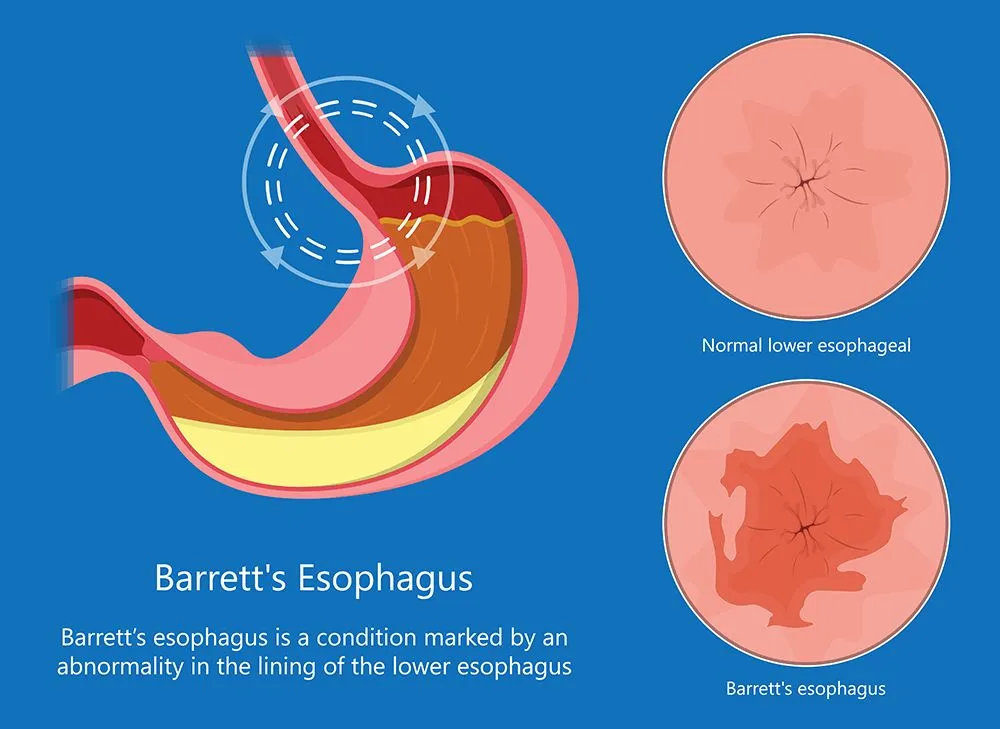
How Barrett’s Esophagus Develops
The esophagus is designed to transport food from the mouth to the stomach, but it is not built to withstand repeated exposure to acid. Over time, chronic reflux can irritate the lining and lead to changes in the type of cells that line the lower esophagus. This condition is known as Barrett’s esophagus. While many individuals with reflux never develop Barrett’s esophagus, persistent symptoms over several years may increase risk.
Why Monitoring Is Important
Barrett’s esophagus itself does not usually cause new or different symptoms beyond those associated with reflux. However, it can increase the risk of developing esophageal cancer in a small percentage of patients. For this reason, structured monitoring is recommended. Endoscopic evaluation allows direct visualization of the esophageal lining and enables biopsy when needed to assess for precancerous changes.
Diagnostic Evaluation
Diagnosis of Barrett’s esophagus requires upper endoscopy with biopsy. During the procedure, the esophagus is carefully examined for areas of abnormal tissue. Tissue samples are reviewed to determine whether cellular changes are present and whether dysplasia, or precancerous changes, have developed. This detailed assessment helps guide decisions about surveillance intervals and treatment options.
Treatment and Ongoing Care
Management typically focuses on controlling acid reflux and monitoring the esophagus over time. Acid-reducing medications and lifestyle adjustments help decrease ongoing irritation. In cases where dysplasia is identified, advanced endoscopic therapies may be recommended to remove or treat abnormal tissue. Individualized care plans are developed based on the degree of cellular change and overall health.